
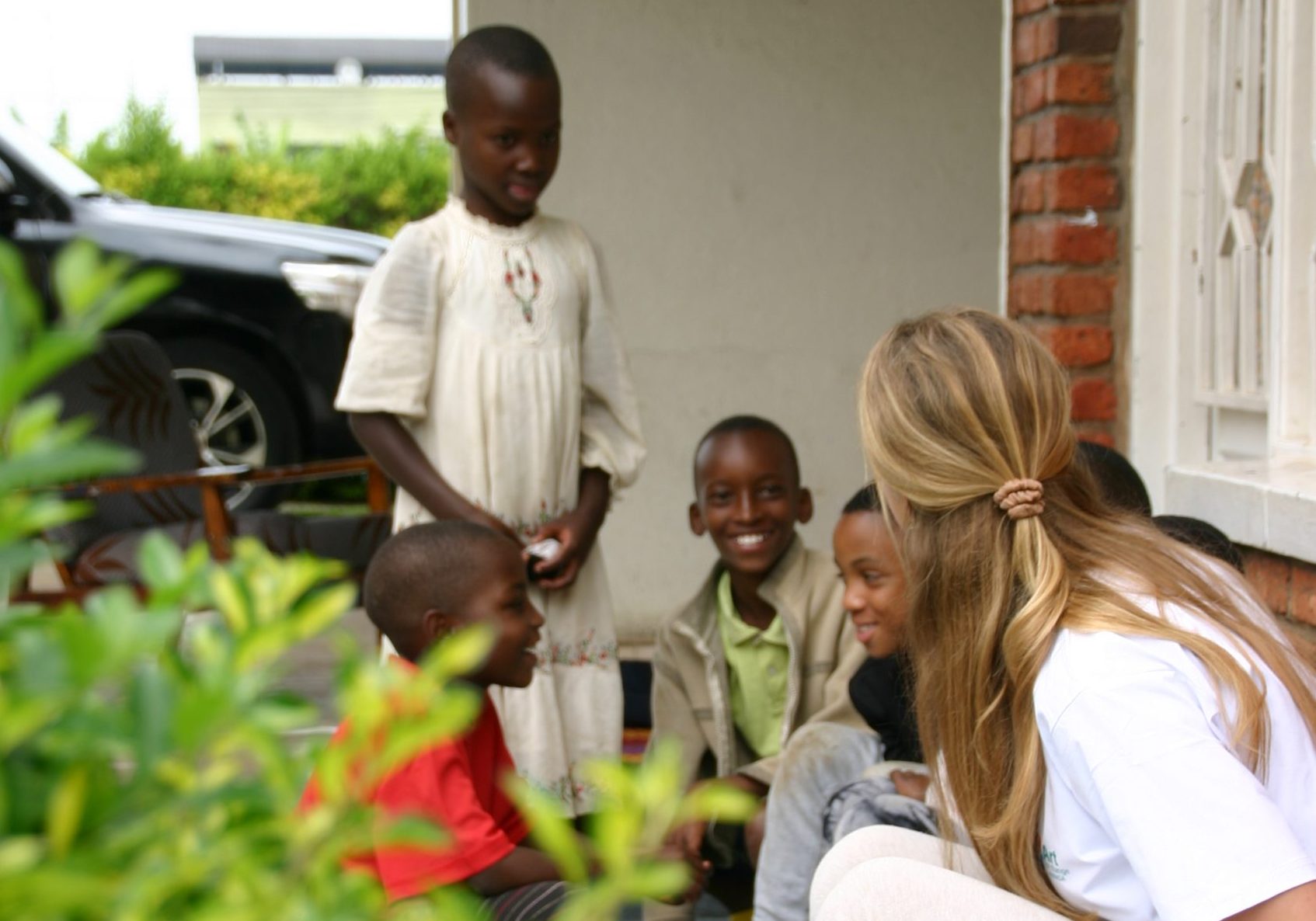
I did not arrive in Rwanda unaware of inequality. That would be convenient, and it would be false.
I arrived already knowing that the number of doors available to me, educational, financial, institutional, was never a global standard. I grew up inside systems that expect continuity: schools that assume students will return the following year, institutions that intervene before failure becomes permanent, resources that exist not as prizes for brilliance but as the background conditions that allow it to appear. We call this arrangement merit. It performs, with much greater reliability, as access.
What I did arrive with, however, was a familiar set of assumptions about Africa, the kind that come prepackaged with good intentions and an overdeveloped instinct to save. Africa, after all, is still routinely described as lacking: lacking infrastructure, lacking education, lacking expertise. It is a remarkably durable story, considering how long it has been historically disregarded.
My AP African American Studies teacher, Dr. Wilson, has spent years dismantling that narrative with precision and an impressive tolerance for repetition. He reminds us, usually right when the room thinks it already understands, that Africa did not begin when Europe took an interest. Long before colonial borders, there were political systems, centers of learning, and architectural achievements that required advanced engineering and administrative intelligence. Great Zimbabwe did not build itself by accident. The walls of Benin were not the result of enthusiastic improvisation. These were societies organized around knowledge, labor, and long-term planning, facts that history books tend to acknowledge briefly before moving on.
Rwanda has little interest in that kind of forgetting.
Driving through Kigali, the most visible feature was construction, roads being widened, buildings rising steadily, entire sections of the city under deliberate expansion. This is not incidental. After 1994, Rwanda rebuilt under conditions that made inefficiency expensive and disorder unaffordable. Development here is expressed through execution rather than declaration. The economy, and the pace that governs it, make that clear.
That same seriousness appeared in conspicuous places. In a beauty salon near the guesthouse where I was staying, a young woman my age approached me first, composed, direct, entirely at ease. We spoke about ordinary things before she told me she plans to become a doctor. She explained how she studies every day and which barriers she expects to face. There was no performance in the telling. No request for reassurance. I remember being struck not by her ambition, but by her grace, by how naturally she occupied her own intelligence.
At Sangira, the vocational school I work with, that combination of realism and discipline was institutionalized. The first classes were taught without notebooks. Students wrote on their thighs, because of the lack of materials and tools like a notebook and a pen. Chairs were rented daily, white plastic wedding chairs, returned each evening and paid for again the next morning. This was not framed as a sacrifice. It was explained as logistics. Today, graduates work in hotels, kitchens, and management positions across the region.
As I moved through the country, spoke with educators, watched the first women drummers who trained for years before ever performing publicly, and observed leadership exercised without extravaganza, a pattern became impossible to miss. Skill was present. Intelligence was present. Discipline was unmistakable. What was uneven was not talent, but access, to resources, to institutions, to the kinds of opportunities that allow ability to expand instead of stall.
None of this is new. Long before colonial intervention, this region sustained dense populations through sophisticated agricultural and social systems. More recently, Rwanda rebuilt itself with an emphasis on coordination, education, and collective responsibility. The result is not a society waiting to be instructed, but one that operates with seriousness, about work, about learning, about the future.
This essay is not concerned with whether Rwanda has potential.That potential is already visible, active, and widely underestimated.
It is about what follows once you stop confusing opportunity with ability, and once the impulse to save gives way to the far more demanding, and far more respectful, task of making opportunity available to people who have already shown what they can do with very little.
What I underestimated, even with all my “awareness”,was the level of discipline that can exist where resources do not.
In the world I come from, hardship often arrives as a metaphor. We are exhausted by schedules we created, overwhelmed by choices we demanded, and crushed under pressures we treat as personality traits. We say we are “barely surviving” while standing in front of stocked refrigerators, reliable electricity, and institutions designed, however imperfectly, to catch us before we fall too far. It is not that these struggles are imaginary. It is that their scale is often flattering.
Then I interviewed Clarisse Mutumwinka at Sangira, and the scale corrected itself.
Clarisse is twenty-five years old, a single mother to a ten-year-old daughter, and one of the most disciplined people I have met. She grew up in a family of eleven children, sustained by parents who, as she put it plainly, “did everything possible to provide our basic needs.” There was no framing here, no polishing of the sentence to make it palatable or impressive. It was simply a fact, delivered with the ease of someone who has never had the luxury of narrating her own life for effect.
She first heard about Sangira by chance, while waiting in a hospital for her daughter. Other people nearby were talking about a hospitality school in the Nyamasheke District. Clarisse listened, asked questions, and followed up. Later, she described that moment without spectacle: “I was eager to have a skill in my life.” That opportunity, once accessed, introduced structure where there had previously only been effort, and direction where once had been endurance.
“Sangira gave me a chance to build my life again.” Build is the operative word here. Not escape. Not restart. Build implies planning, patience, repetition, and responsibility for what comes next. And once that process began, Clarisse moved with a speed that made the earlier delays look less like personal failure and more like systemic withholding.
She is living proof that: when access appears, ability accelerates. Nothing essential had to be added to Clarisse, no intelligence imported, no discipline installed, no motivation injected. What changed was the availability of resources, time, and institutional trust.
This is why the question we keep asking, Are they qualified enough?, reveals more about us than about them. It shifts responsibility away from systems and onto individuals who have already proven themselves under conditions most of us would consider unworkable. Capability has never been the missing variable. What has been rationed is access. And as long as opportunity remains rarer than talent, brilliance will continue to be treated as suspicious until it overperforms.
If this makes us uncomfortable, it should. Because once you understand how little it takes to unlock what is already there, inaction becomes far harder to justify. All Clarisse needed was a chance. She did the rest.
Clarisse’s life makes sense only when placed inside a larger structure. Individual discipline can explain momentum; it cannot, on its own, explain scale. To understand why her trajectory was possible at all, one has to move from personal effort to institutional design.
When I spoke with Christian, the principal of Sangira, he did not speak about the genocide as history. He spoke about it as inheritance. The students, he explained, are not only working through their own lives, but through wounds they did not personally receive, patterns of disruption that continue to shape family stability, access to education, and economic security decades later. Research on post-genocide Rwanda supports this observation: studies show persistent intergenerational effects on mental health, income, and educational attainment among children of survivors, even as national indicators improve. The imprint of trauma here is visible, measurable, and ongoing.
Rebuilding a society after genocide is not an abstract exercise. It requires governing under sustained pressure, where institutional weakness does not merely slow progress but deepens harm. Administrative failure in this context carries consequences that compound quickly, missed schooling becomes lost income, uneven enforcement becomes eroded trust, and fragile systems struggle to absorb even minor shocks. Rwanda’s post-1994 path must be read with this reality in mind.
Today, Rwanda consistently ranks among the least corrupt countries in Africa, often outperforming states with significantly higher GDPs on measures of transparency and public trust. According to Transparency International’s Corruption Perceptions Index, Rwanda has remained near the top of the continent for years, not because corruption vanished, but because it became inconvenient to tolerate. The more interesting irony is that countries with vastly greater resources, and far more conferences devoted to “good governance”, continue to debate problems Rwanda decided to administer away.
The same pragmatism appears in political representation. Rwanda holds the highest percentage of women in parliament in the world, with women occupying over sixty percent of seats. Internationally, this is often framed as symbolic progress. Domestically, it functions as a necessity. A country rebuilding itself after mass death and displacement cannot afford to restrict political participation to a narrow segment of the population. Research has linked women’s representation in Rwanda to concrete policy outcomes in health, education, and post-conflict reconciliation, not because women govern with innate virtue, but because representation reshapes legislative priorities and reallocates attention toward long-term social investment.
Public order reflects this collective logic. Practices such as Umuganda, monthly mandatory community service, embed responsibility into daily civic life rather than outsourcing it to abstraction. Infrastructure, cleanliness, and local accountability are maintained through participation that reinforces shared ownership of public space. The philosophy aligns closely with ubuntu, the understanding that individual well-being is inseparable from communal stability, and translates into higher levels of social trust and institutional predictability.
Education is where both progress and constraint are most apparent. School attendance is compulsory, and Rwanda has made sustained investments in literacy, language instruction, and digital access as tools of economic participation. Primary school enrollment rates exceed ninety percent, and gender parity has largely been achieved. At the same time, resources remain uneven, class sizes large, and secondary and tertiary access limited for many families. Rwanda’s seriousness about education is evident not in triumphal claims, but in its recognition of this gap, between ambition and access, and in the effort to narrow it through institutions like Sangira, one student at a time.
There comes a point when witnessing stops being virtuous. It usually arrives right after admiration has delivered its emotional payoff and just before action threatens to interfere with one’s schedule. At that moment, observation is then rebranded as wisdom,and restraint quietly reveals itself as comfort with better vocabulary.
This is where good intentions declare the mission accomplished. Concern is expressed, insight is claimed, and the world remains impressively unchanged. We reassure ourselves that awareness counts for something, reflection counts for more, and action, well, action can wait until conditions are ideal. They rarely are.
Rwanda makes this logic difficult to maintain. Not by asking for belief, but by presenting evidence. What I encountered here was not potential waiting to be discovered, but ability waiting to be allowed. Discipline already in motion. Intelligence already at work. What was missing was not motivation, but the infrastructure that keeps effort from dissolving into exhaustion.
This is the part we tend to misunderstand on purpose. We talk as if opportunity were a reward for excellence, when in reality excellence is usually the result of opportunity being boringly consistent. We celebrate resilience without questioning why it is required so often in some places and so rarely in others. We admire people like Clarisse precisely because they succeed despite conditions, then quietly preserve those conditions.
Once you see how little it takes to turn discipline into direction, neutrality stops being a thoughtful position and starts looking like a preference. Not choosing becomes a choice. A comfortable one.
And the most interesting question is no longer whether the world can change, but how many of us are willing to give up the excellent view from the observation deck to help rearrange the structure itself.
-yk